Lawyers can help their communities through pro bono work, free legal services, legal aid, and public service. They help individuals navigate legal issues, protect civil rights, expand access to justice, and strengthen local organizations through volunteer efforts that use both legal and non-legal skills.
Volunteering is also a practical and established part of many legal careers. Bar associations and law firms often encourage pro bono work and community service as a way to support people who cannot afford legal representation while helping attorneys build skills and experience. In many cases, these efforts are structured, supported, and integrated into professional expectations.
Below are practical, realistic ways lawyers can give back to their communities. The list includes options that use legal expertise, opportunities that do not require practicing law, and ideas that fit a range of schedules and career stages, making it easier to find an approach that aligns with your skills, interests, and capacity.
Why Lawyers Matter to Communities and Society
Lawyers contribute to the health and stability of communities in ways that extend far beyond individual cases or courtrooms. Their work helps systems function fairly and predictably, which benefits everyone.
Key ways lawyers matter include:
Upholding the rule of law Lawyers help ensure communities operate under shared rules rather than power, wealth, or influence by consistently interpreting and applying the law.
Preventing disputes from escalating By resolving conflicts early and fairly, lawyers help stop legal problems from turning into broader personal or community crises.
Helping people understand their rights Legal guidance allows individuals and families to make informed decisions before mistakes are made, particularly in areas like housing, employment, and family matters.
Strengthening trust in institutions Consistent, fair legal processes build confidence in public systems and support long-term stability.
Expanding access to justice When lawyers contribute time and expertise beyond paying clients, they reinforce fairness and help ensure legal protections are available to more people.
These foundational roles explain why the following ways to give back are meaningful, practical, and essential to healthy communities.
Use Your Legal Skills To Expand Access to Justice in the Community
These opportunities focus on using legal training, advocacy, and subject-matter expertise to support individuals and communities facing legal barriers.
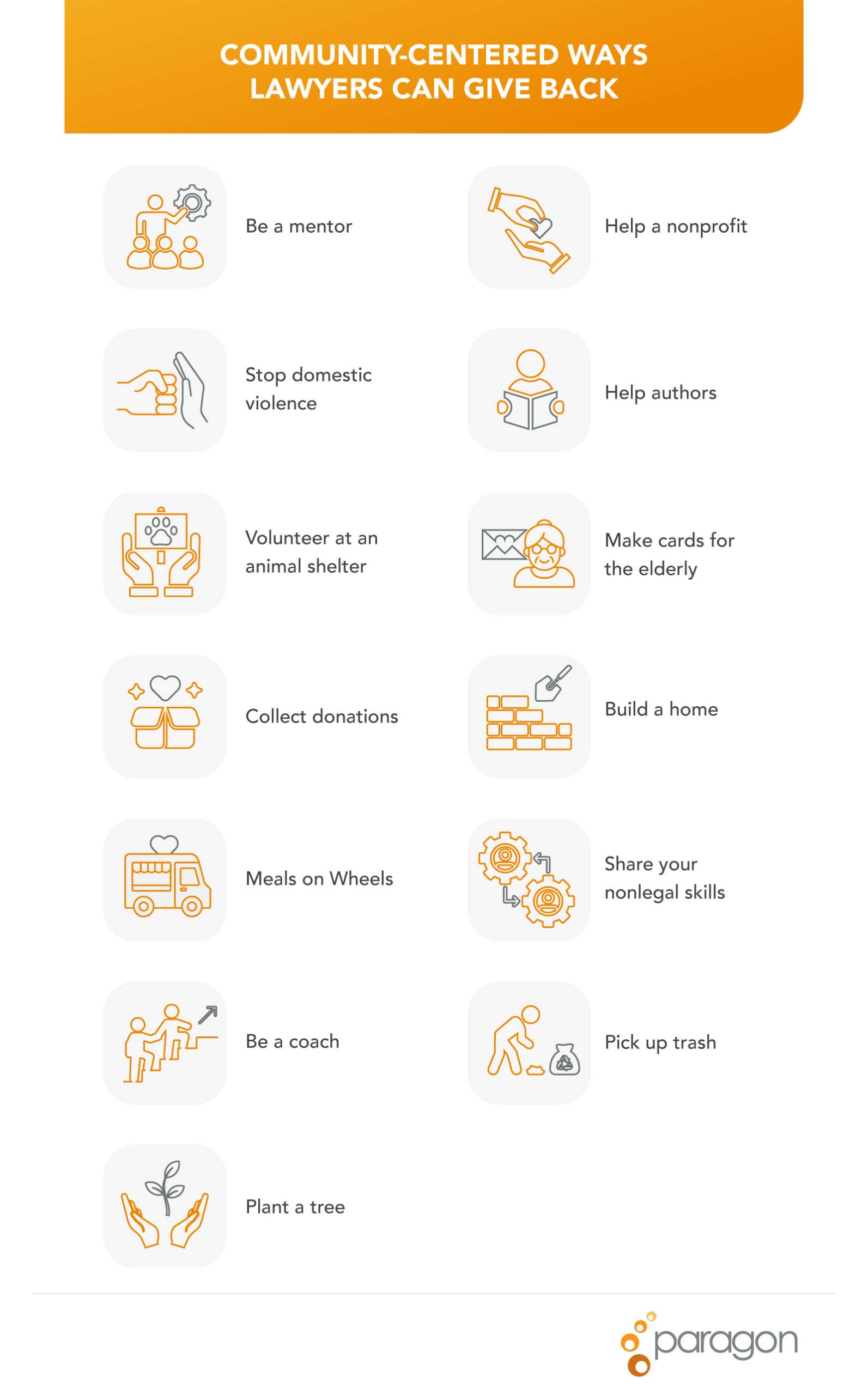
Be a Mentor
Mentorship is a terrific opportunity to be involved in the community.
Sure, you can mentor an up-and-coming law student — that would be great — but working with a school-aged kid, maybe through Big Brothers Big Sisters or a similar organization, provides a positive role model while also giving you a sense of fulfillment from knowing you’ve legitimately helped a person.
Boost a Non-Profit
Mentoring not your thing? Consider volunteering for a non-profit close to your heart. You can apply your law knowledge, or, if you’d like, you can do more grunt work, lead a letter-writing campaign, cold call for donations, or organize their supply closet. Sure, it’s not glam, but it’s helpful — and that’s the point here.
Whatever route you take, dedicating time and energy to a good cause is always a good idea. Not sure where to start? The website Charity Navigator is a great resource for people interested in identifying worthy, well-run non-profits.
Stop Domestic Violence
Domestic violence is a serious civil rights and access-to-justice issue that affects millions of people in the United States. Data from the Centers for Disease Control and Prevention’s National Intimate Partner and Sexual Violence Survey (NISVS) show that about 41% of women and 26% of men have experienced contact sexual violence, physical violence, or stalking by an intimate partner during their lifetimes.
Whether you draw on your legal background or not, lending your voice, time, or expertise to advocacy efforts, pro bono legal services, or community organizations that support survivors and help them navigate the justice system can make a meaningful difference.
Help Authors
A novel way to use your legal skills for good: help authors with legal questions!
For every Stephen King, there are 1,000 struggling writers facing unique legal situations, including rights management, copyright questions, or defamation cases.
If you love the written word and want to help authors achieve equitable pay and treatment, the Authors’ Guild and similar organizations are great collaborators.
Support Basic Needs and Community Stability Through Service
These options address essential needs such as housing, food security, and material support, particularly for low-income individuals and families.
Collect Donations
This is a great route if you don’t really want to deal with people but still want to help.
In addition to collecting clothes for the homeless or canned goods for the hungry, you can collect books for the library, makeup for women’s shelters, or gently used professional clothes for organizations that help people with the job interview process.
Another great option: build a free pantry on your block or street. That way, you can help consistently while also enlisting help from neighbors.
Build a Home
Homelessness is a pressing civil rights and housing access issue that disproportionately affects low-income individuals and families.
According to the U.S. Department of Housing and Urban Development’s 2024 Annual Homelessness Assessment Report to Congress, an estimated 771,480 people experienced homelessness on a single night in January 2024, the highest number recorded in the federal point-in-time count.
If you want to support housing stability and help expand access to safe, affordable housing, organizations such as Habitat for Humanity and Rebuilding Together offer hands-on opportunities to build or rehabilitate homes for low-income households.
These efforts complement legal advocacy and pro bono work aimed at preventing displacement and advancing equitable housing solutions, while also giving volunteers a tangible way to contribute to their communities.
Roll With Meals on Wheels
Supporting efforts that help feed and care for vulnerable community members is another impactful way to give back. Food insecurity, limited or uncertain access to adequate food, remains a serious issue in the United States.
According to the U.S. Department of Agriculture’s 2024 Household Food Security report, about 13.7% of U.S. households experienced food insecurity at least some time during the year, meaning they struggled to consistently put enough food on the table.
Programs like Meals on Wheels and similar community meal services help address this gap, especially for low-income older adults and individuals with limited mobility. Volunteering with these organizations contributes to basic access to needs while complementing broader legal advocacy and pro bono efforts aimed at expanding access to justice and essential resources.
Strengthen Communities Through Non-Legal Service and Volunteering
Not all meaningful impact requires legal work. These hands-on and skill-based efforts help build stronger, healthier communities in practical ways.
Volunteer at an Animal Shelter
All right, if you want to do good but don’t want to do anything legal-related, what about working at an animal shelter? Many need help picking up donations, keeping kennels clean, walking dogs, and helping manage adoption applications.
In addition to providing an essential service for often underfunded organizations, you can bring some joy to a stray animal. Who knows, maybe you’ll find one to take home and provide a forever home.
Loneliness is a very real condition. According to the CDC, feeling socially disconnected contributes to poor health, including heart attacks, can contribute to dementia, increases the risk of suicide, and raises the likelihood of strokes. This is particularly true among people of color, LGBTQ people, and immigrants who are already socially isolated.
To help combat this scourge, consider spending an afternoon or weekend writing or designing special notes for a local nursing home. Even if you don’t know who you’re specifically addressing, a note saying “I’m thinking of you” can go a long way to the reader.
Or, if you’d like to get even more involved, volunteer with a local elder care organization to visit a nursing home or be set up with an isolated community member near you.
Share Your Non-Legal Skills
You do not need to be doing legal work to make a meaningful impact. Non-legal skills, such as baking, music, crafting, or tutoring, can be shared for free with low-income individuals and families through community organizations, bar association initiatives, or programs connected to a law school or local law firm. These efforts can help people facing eviction, family law challenges, or other legal issues by strengthening stability and confidence outside the courtroom.
Many legal aid providers and American Bar Association–affiliated initiatives welcome volunteers who can support fundraising events, community workshops, or educational programs that complement legal assistance, legal advice, and legal representation. To get started, consider reaching out to a local community center, a bar association program, or an initiative connected to pro bono cases in your area.
Be a Coach
Along the same lines, if you’re a great sports player and have time to coach a local team, reach out and see if they need some help. You’ll help your community, get some exercise, and, who knows, maybe win the big championship!
Improve Public Spaces and the Environment
These activities focus on improving shared spaces and environmental conditions that benefit entire neighborhoods.
Pick Up Trash
Here’s another great option for people who want to help people but don’t want to deal with people. Just grab a plastic bag, some rubber gloves, and hit the road. Sure, it’s not a glamorous activity, but it helps your community, and seeing you may inspire someone else to do the same.
Plant a Tree
What do you think trees plant themselves? Well, they do, but not enough of them.
Want more volunteer opportunities? Consider checking out Volunteer Match, Idealist, and even LinkedIn; all sites that can help connect you to groups or causes in your area.
Also, the local news is a great resource on this front: Reporters in your area often highlight people or communities in need who will benefit from your kindness.
About Paragon
Paragon is a premier legal services firm providing interim in-house counsel to leading corporate legal departments. Paragon attorneys have deep experience in a wide range of practice areas, including privacy, employment, and intellectual property, and are ready to help your legal team tackle its next challenge.
Whether you’re looking for specific expertise, the flexibility to move attorneys between teams, or assistance during a hiring freeze or tight budget period, Paragon has you covered. Through this work, Paragon supports organizations in meeting critical legal needs and maintaining effective legal representation when it matters most.
Contact us to learn more about Paragon and our attorneys.
FAQ About Lawyers and Community Impact
Lawyers play many roles in their communities, and those roles are not always well understood. The questions below address common gaps in understanding around how lawyers contribute to society, how laws support communities, and why legal work matters beyond volunteering or courtroom appearances.
How do lawyers help the community beyond volunteering?
Lawyers support their communities every day through routine legal work, not just volunteer efforts. Drafting contracts, advising employers and employees, handling housing matters, and guiding organizations on compliance all help prevent disputes before they escalate.
By identifying risks early and clarifying obligations, lawyers reduce harm, save time and money, and keep systems functioning smoothly. This work promotes fairness and predictability, even when it never reaches a courtroom or involves pro bono service.
How do laws help communities function?
Laws create structure, define rights and responsibilities, and offer protections that help communities operate safely and fairly. On their own, however, laws are often complex and difficult to navigate. Lawyers play a critical role by interpreting those laws, ensuring access to legal protections, and helping people understand how rules apply to real-life situations.
Can lawyers help people without going to court?
Yes. Much of a lawyer’s work happens outside the courtroom. Lawyers provide counseling, negotiate agreements, educate clients about their options, and help resolve issues early. This approach can reduce stress, limit costs, and prevent disputes from becoming more serious or adversarial.
Is pro bono work expected of lawyers?
Many bar associations encourage lawyers to contribute pro bono hours as part of professional responsibility, and some firms formally support or track that work. Beyond public service, pro bono cases can also help lawyers build skills, gain experience, and better serve their communities.
We may request cookies to be set on your device. We use cookies to let us know when you visit our websites, how you interact with us, to enrich your user experience, and to customize your relationship with our website.
Click on the different category headings to find out more. You can also change some of your preferences. Note that blocking some types of cookies may impact your experience on our websites and the services we are able to offer.
Essential Website Cookies
These cookies are strictly necessary to provide you with services available through our website and to use some of its features.
Because these cookies are strictly necessary to deliver the website, refusing them will have impact how our site functions. You always can block or delete cookies by changing your browser settings and force blocking all cookies on this website. But this will always prompt you to accept/refuse cookies when revisiting our site.
We fully respect if you want to refuse cookies but to avoid asking you again and again kindly allow us to store a cookie for that. You are free to opt out any time or opt in for other cookies to get a better experience. If you refuse cookies we will remove all set cookies in our domain.
We provide you with a list of stored cookies on your computer in our domain so you can check what we stored. Due to security reasons we are not able to show or modify cookies from other domains. You can check these in your browser security settings.
Other external services
We also use different external services like Google Webfonts, Google Maps, and external Video providers. Since these providers may collect personal data like your IP address we allow you to block them here. Please be aware that this might heavily reduce the functionality and appearance of our site. Changes will take effect once you reload the page.
Google Webfont Settings:
Google Map Settings:
Google reCaptcha Settings:
Vimeo and Youtube video embeds:
Privacy Policy
You can read about our cookies and privacy settings in detail on our Privacy Policy Page.


















 Employee Portal
 Apply
Apply