For many attorneys, “work-life balance” can feel about as realistic as catching Bigfoot digging through your trail mix on a camping trip. And who are we kidding? You don’t have time to go camping.
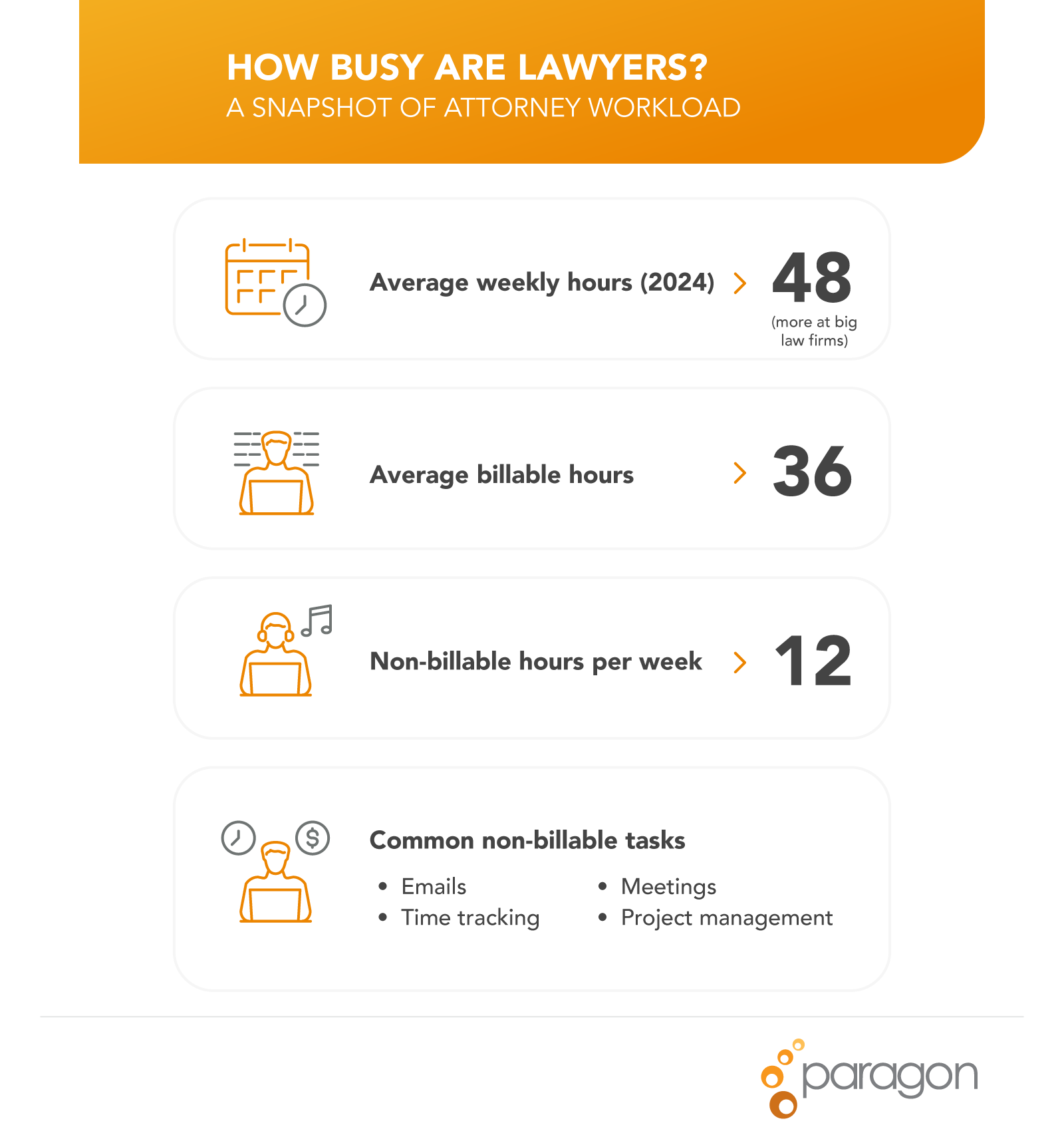
Thanks to long hours, heavy caseloads, and a demanding culture, finding time for hobbies and personal life can be a struggle for lawyers, particularly those working within big law firms. The legal profession has always been intense, but the numbers today paint a stark picture: According to the Bloomberg Law 2025 Attorney Workload and Hours Survey, attorneys reported working an average of 48 hours per week in 2024, yet only 36 of those hours were billable, meaning 12 hours of every workweek go to non-billable administrative tasks like tracking time and managing projects. For lawyers in large firms, the workday stretches even further, with many logging 60- to 80-hour weeks to meet billable hour requirements and client demands.
The toll is real. A 2025 survey by Rev and Centiment found that nearly 80% of legal professionals reported feelings associated with burnout in the past year, and for almost 40% of them, those feelings were regular or constant. Perhaps most alarming: Nearly 60% have seriously considered leaving their current role, or even the legal profession altogether, due to work-related stress. Attorney burnout isn’t just a personal problem; it’s a structural one, and it’s costing law firms between $200,000 and $500,000 per lawyer lost.
At Paragon Legal, we aim to provide both flexibility and high-level legal work, allowing lawyers to finally make work-life balance a reality. And from the client’s perspective, happy lawyers are better positioned to deliver top-quality work than those who are burned out.
In the spirit of helping busy lawyers of all stripes promote well-being and a healthier workflow, here are practical time management strategies you can start using today.
Do a Time Audit
The first step in understanding where your workday is going is to do a time audit.
In her book Time Smart, Harvard Business School professor Ashley Whillans recommends keeping a log of how you use your time during a random Tuesday (if you can’t swing Tuesday, pick any other work weekday).
For each activity, Whillans suggests noting how you feel about it, including whether the activity was productive, fun, or purposeful. If an activity made you stressed or unhappy, consider whether you can spend less time on it.
If you can’t ditch a task altogether, Whillans asks if you can make it more fun or less stressful. Popping on some music or a podcast can turn dreaded tasks, like logging your billable hours or washing dishes, into something you actually look forward to.
A time audit can also reveal just how much of your day goes to non-billable work. When you see how many hours are consumed by emails, internal meetings, and administrative busywork, it becomes easier to identify what to cut, streamline, or automate.
Schedule Focused Time
When you’re constantly reacting to requests and messages, making headway on important projects can feel impossible. You spend all day responding to emails, taking calls, and sitting through meetings, only to look up at 7 p.m. and realize you didn’t actually get anything done.
To combat this, try scheduling at least an hour every day where you block out distractions and focus on an important, but not urgent, task.
Whillans calls this “proactive time” or “pro-time” for short. This time period can be used for work projects, personal goals, or even leisure activities you always put off.
The key is to be disciplined about guarding this time. Whillans recommends blocking off your calendar and shutting out all distractions during pro-time.
Using this period for longer-term projects can also keep deadlines from creeping up on you, allowing you to feel less stressed and more in control of your legal practice.
Use To-Do Lists
Don’t underestimate the power of a simple to-do list: It will help you -set priorities for the day and keep you on track.
Remember to keep your list short and sweet, so you don’t list more tasks than you can actually get done in a day (recommendations for the number of tasks vary, but often run from three to six).
Try keeping the list visible, so your priorities stay top-of-mind, even as fresh requests pop up during the day.
You can write your list in a notebook, a planner, a whiteboard, a sticky note, or even a digital app such as Evernote or the Notes app, which has a checklist feature. An app or notebook also has the benefit of being portable, so no matter where you are, you can write down tasks for future lists.
Try Time Blocking
Time blocking is when you divvy up your day into blocks of time, during which you focus on specific tasks.
For instance, you might only check email messages from 10–11 a.m. and 4:30–5:30 p.m., allowing you to avoid constant email interruptions while you’re working on projects. This kind of structure can be especially helpful for litigators and corporate lawyers juggling multiple matters with competing deadlines.
When you decide to do certain tasks is also important. For some people, it’s easier to tackle time-consuming work in the morning, while others may find they have better focus in the afternoons. Try scheduling tasks that require more concentration for when you have better focus.
From Slack notifications to news alerts, we live in a distraction-heavy world.
But each of those interruptions comes with a time cost. Even brief mental blocks created by shifting between tasks can consume up to 40% of a person’s productive time. For lawyers who are already working long hours to meet billable hour requirements, losing 23 minutes per interruption adds up fast.
To protect your focus, minimize switching between tasks as much as possible. Mute that group chat, turn off unnecessary social media notifications, and even consider putting your phone in silent mode or in a drawer while working on a project.
Use a Timer
Using a timer can be immensely helpful in keeping you focused, while also encouraging short breaks to keep your brain fresh.
A timer can help you use the Pomodoro Technique, a popular time management system in which you focus on a task for 25 minutes, followed by a five-minute break.
You can use a smartphone app, like Focus Keeper or the Bear Focus Timer, which acts as both a timer and a way to stop you from checking your phone screen. There are also a plethora of other tools — such as Freedom — that will help you reduce pesky app distractions.
Outsource, Delegate, and Learn To Say No
Sometimes the best way to find more personal time is to get rid of a task altogether. In Time Smart, Harvard professor Ashley Whillans advocates for outsourcing tasks that you especially dislike, noting that spending a bit on time-saving services, like shopping, cleaning, and laundry, can reduce time stress and increase happiness.
Similarly, don’t be afraid to delegate tasks, even if it means giving up some element of control. There’s no sense in lengthening your workday by insisting on doing things you could be giving to others (as long as they have room on their plate for it).
And if you’re a perfectionist who struggles with delegation, keep in mind how perfectionism could be stealing your time in other ways; for instance, by spending 20 minutes perfecting an email that really could have been written in 10.
Finally, harness the power of saying no. This can be tricky for people pleasers or folks eager to show they’re team players. But attending every meeting or taking on too many projects can make you feel like there aren’t enough hours in the day.
When possible (and we know it isn’t always possible, but go with us here), try gently excusing yourself from unnecessary meetings or extra projects. Protecting your time isn’t selfish; it’s how you sustain a long, healthy legal career.
Rethink What a Legal Career Looks Like
Many of the work-life balance challenges lawyers face are built into the structure of traditional law practice. Long hours, late nights, and the relentless pressure of billable tasks are embedded in how most law firms operate, especially big law firms, where 60-plus-hour weeks are the norm.
But the legal field is changing. More experienced attorneys are exploring flexible legal careers, including in-house counsel roles, contract work, and interim engagements, that offer meaningful legal work without the unsustainable workweek of a traditional firm. It’s possible to rethink what career success means in this field.
The LawCare Life in the Law 2025 report found that more than half of legal professionals could see themselves leaving their current workplace within five years, reflecting a profession-wide need for better options.
Flexible work arrangements, like the kind offered through Paragon Legal’s benefits, give attorneys control over their schedules while still doing substantive, high-level legal work across practice areas like commercial transactions, data privacy, employment, and more. It’s one way the legal industry is evolving to support lawyer mental health and well-being without sacrificing the quality of work clients expect.
Find the Balance That Works for You
Work-life balance isn’t a destination. It’s an ongoing process of making small, intentional adjustments. Whether it’s auditing your time, blocking off your calendar, automating repetitive tasks, or rethinking your career structure altogether, the goal is the same: to spend less time feeling burned out and more time on the things that matter to you.
The legal profession will always be demanding. But busy lawyers who take steps to manage their workflow, protect their personal time, and set boundaries are better positioned to build sustainable careers and to deliver better work for their clients in the process.
Looking for a way to practice law that still leaves time for life? Paragon Legal offers flexible engagements for experienced attorneys, giving you control over your schedule without sacrificing quality of work. Whether you’re exploring alternatives to big law or looking for a better way to manage your work hours, learn more about opportunities at Paragon.






 Employee Portal
 Apply
Apply